Distribution management software for wholesalers who sell on credit
Multi-warehouse stock, order-to-invoice processing and customer credit control, sitting directly on a double-entry ledger — so you always know what you are owed and what it cost you.

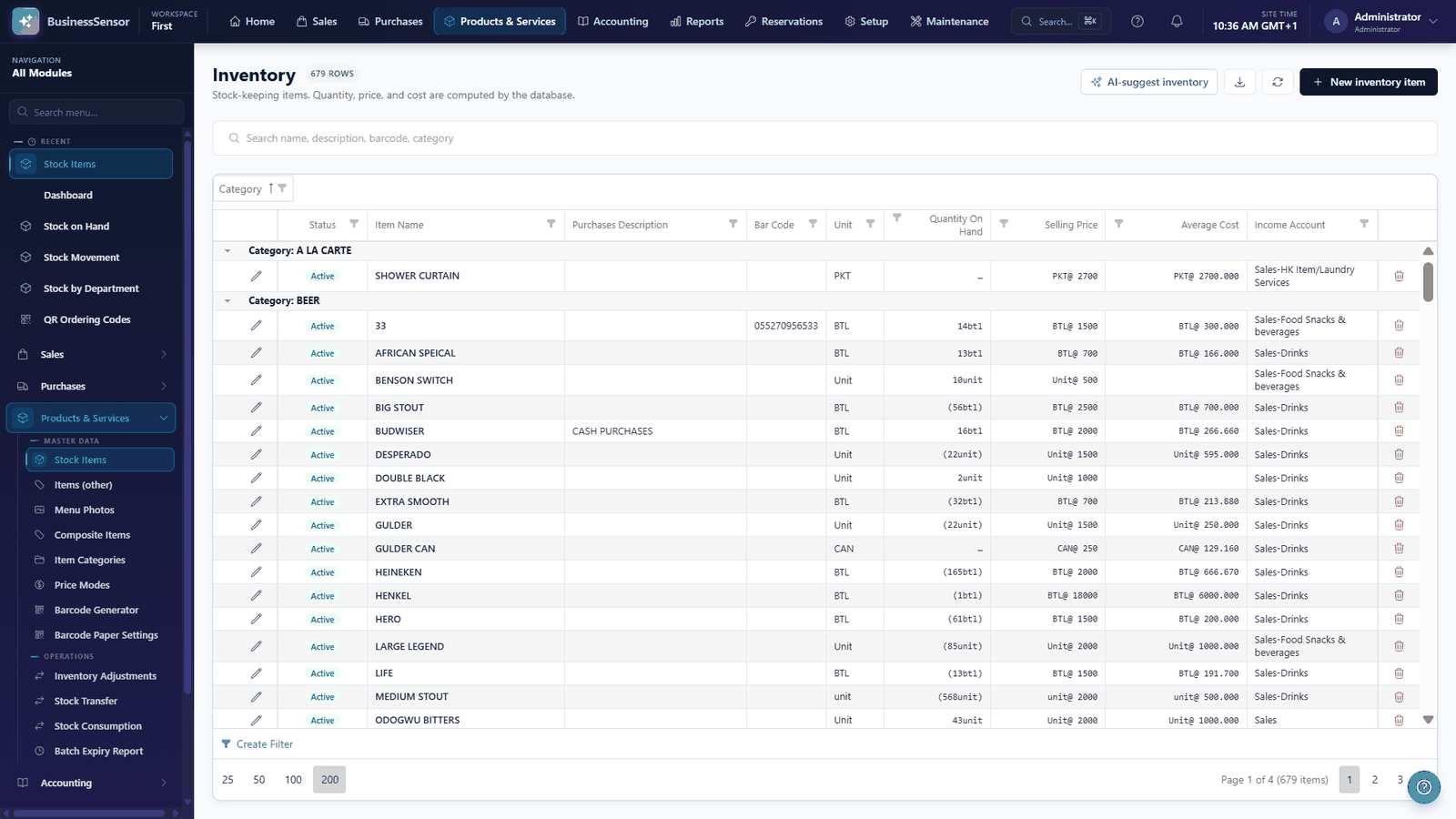
What DMS ERP covers
Everything below is in the shipped product. Nothing here is a roadmap item.
Multi-warehouse inventory
Stock by location with transfers, adjustments and a movement history that explains every quantity on hand.
Sales orders to invoice
Sales order, delivery note and invoice as one connected flow, so what was ordered, what shipped and what was billed always reconcile.
Purchasing & vendors
Purchase orders, goods receipt, vendor bills and payments with landed cost feeding item valuation.
Customer credit control
Credit limits, payment terms, aged receivables and customer statements produced straight from the ledger.
Pricing & discounts
Customer-group pricing, package rates and quantity breaks, applied consistently at the point of order.
Dispatch & waybills
Waybill generation and dispatch tracking from the order that created it.
Sales rep commission
Commission plans by rep, calculated from posted sales and settled through the ledger.
Accounting & reporting
Double-entry accounting, configurable sales and withholding tax, and the full financial statement suite.
From setup to a set of accounts
- 1
Load your catalog
Items, packages, warehouses and price lists.
- 2
Take orders
Sales orders convert to deliveries and invoices without re-keying.
- 3
Control the credit
Limits, terms and aged debtor reporting as sales happen.
- 4
Close the books
Financial statements from the transactions you already posted.
Which tier do I need?
DMS ERP comes in tiers with different limits on users, outlets and volume. The full feature-by-tier comparison and current prices are kept in the catalog, so they are always up to date.
Operators running DMS ERP
"We gained over 200% in profits."
"The software helped me get the true state of my business."
DMS ERP questions
Can it handle multiple warehouses and locations?
Yes. Stock is tracked per warehouse with transfers between locations, and every movement is recorded so the quantity on hand can always be explained.
How does credit control work?
Each customer carries a credit limit and payment terms. Because invoices and receipts post to the ledger as they happen, aged receivables and customer statements are always current rather than a month-end exercise.
Does it track sales rep commission?
Yes. Commission plans are defined per representative and calculated from posted sales, with the resulting liability settled through the ledger.
Can I sell the same item in different pack sizes?
Yes. Items support multiple packages with their own rates, so a carton, a dozen and a single unit can be priced and stocked coherently.
Can it handle withholding tax deducted by customers?
Yes. Withholding tax is handled at document level, where the customer withholds against the invoice total. The withheld amount posts as a receivable against the tax authority rather than being written off, so the credit stays tracked.
See DMS ERP on your own data
We will walk through the parts that matter to your operation and answer the awkward questions.