The difference between a report and a ledger
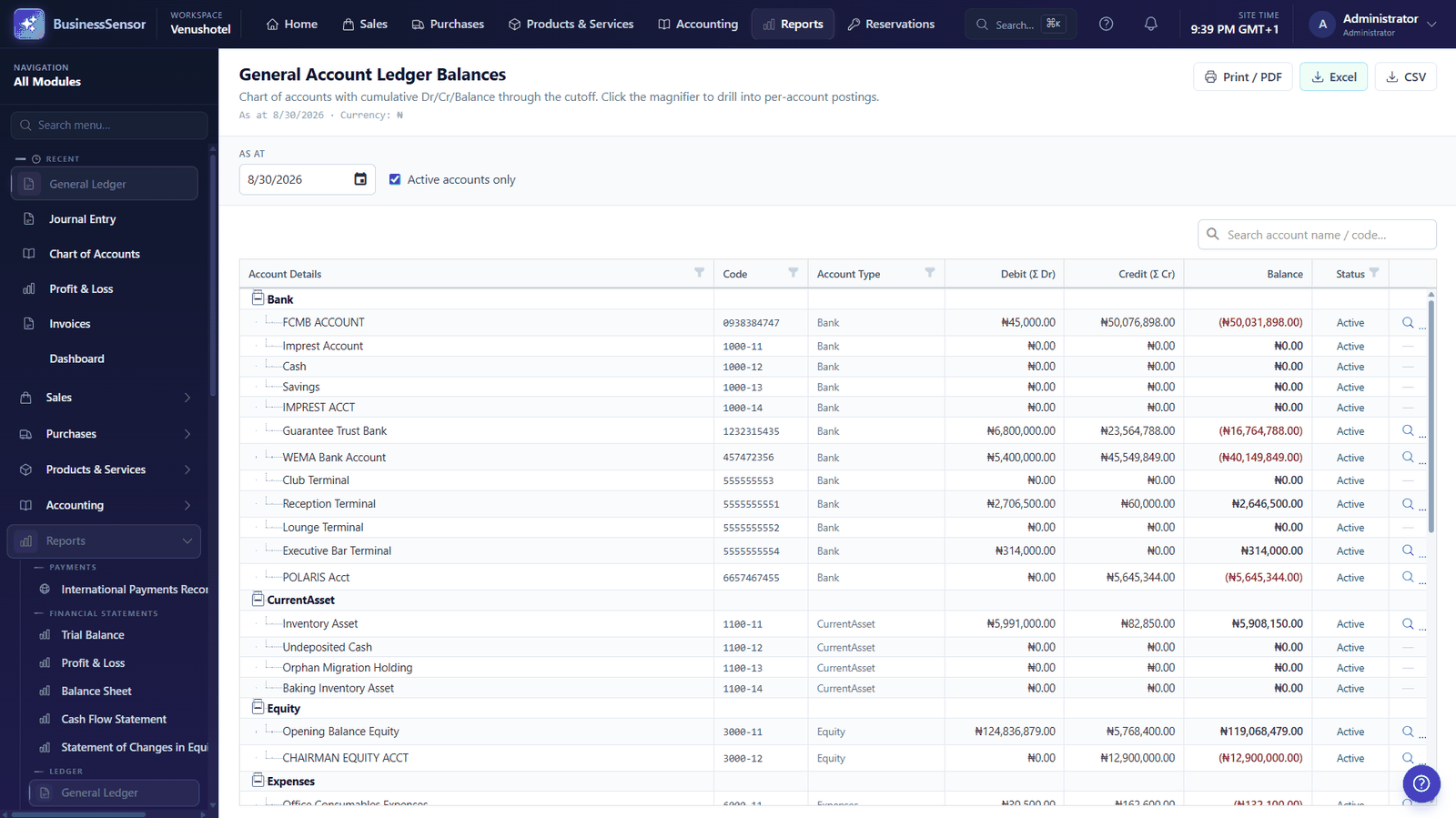
A sales report tells you what was sold. A ledger tells you what happened to the business: which account was debited, which was credited, and whether the two sides agree. Software that only keeps a sales table has to reconstruct accounting afterwards, and reconstruction is where the discrepancies come from — a voided sale that never reversed, a refund that hit revenue but not cash, a payment allocated to the wrong invoice.
Posting happens at the database, not in the application
In BusinessSensor, posting to the ledger is performed by the database itself when a transaction is written. That matters for a specific reason: it means a transaction cannot exist without its ledger entries. There is no code path — no import, no correction screen, no integration — that can create a sale which never reached the accounts.
- Every invoice, receipt, payment, refund and stock movement posts as it is written
- Reversals post as reversals, so the audit trail shows what happened rather than hiding it
- The trial balance is derived from the same rows that produced the operational reports
What you get from it
Because the ledger is the primary record, the financial statements are not a monthly rebuild. Aged receivables reflect this morning’s payments. Cost of goods sold reflects the batch that actually left the shelf. When an auditor asks how a figure was arrived at, the answer is a list of postings rather than a spreadsheet.
- IFRS-aligned financial statements: trial balance, profit and loss, balance sheet, cash flow
- Fiscal year and period close, with a controlled cut-off
- Full drill-down from any figure to the transactions behind it
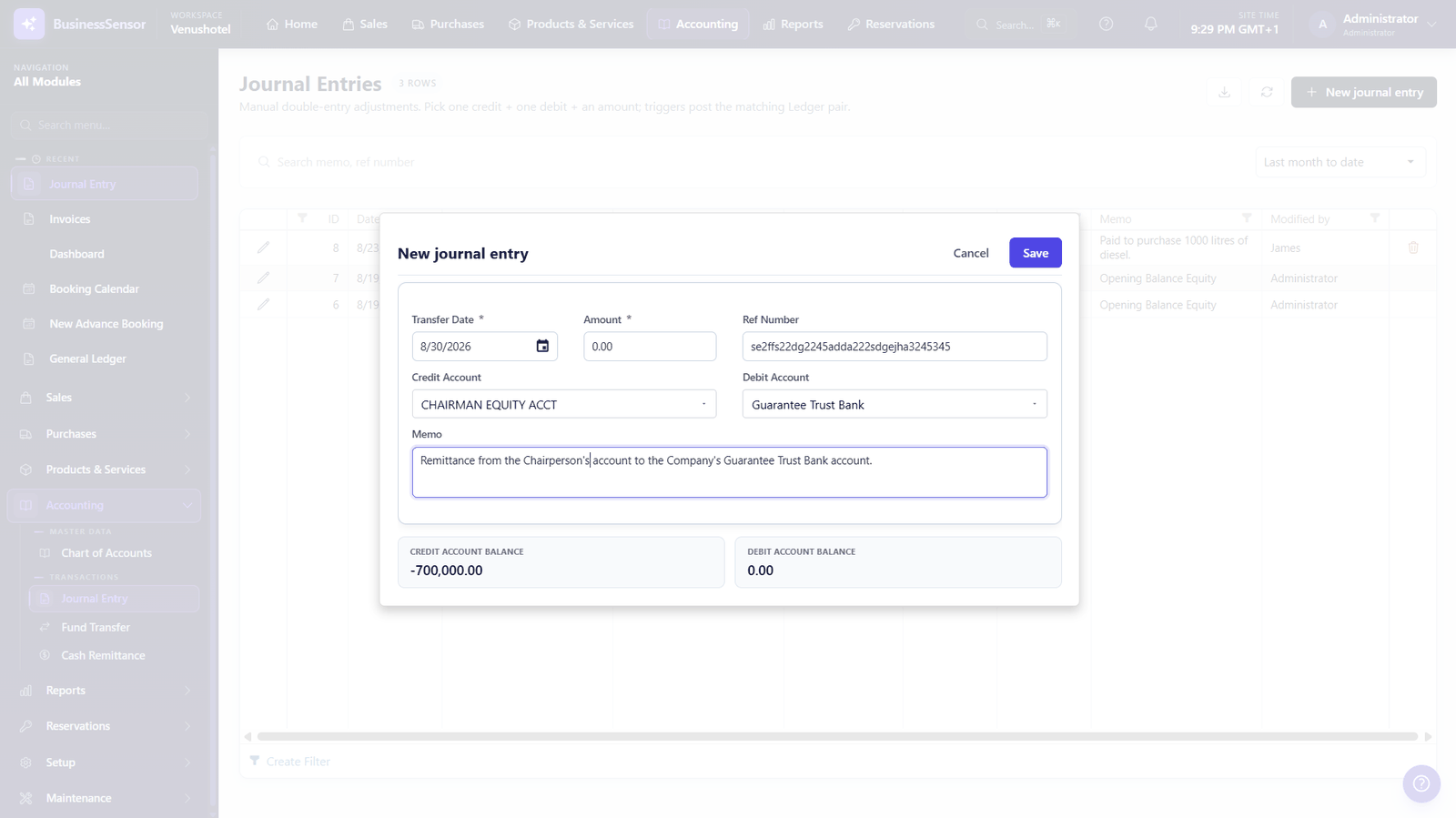
- Manual journals where you need them, posted through the same ledger
It applies to every module
The ledger is shared. A hotel folio, a pharmacy dispensing, a supermarket till and a manufacturing work order all post into the same chart of accounts. That is what makes it possible to run several operations in one business without keeping several sets of books.